
If you want to learn how people actually talk, work in a country pub for ten years. Don’t go to a writing workshop. Don’t buy a book on dialogue. Just stand behind a bar in a town with one set of traffic lights and pour beers on a Tuesday.
That’s where every character in Dead Dog Barking came from. Tuesdays specifically. Friday is a performance. Saturday is theatre. Sunday is regret with a roast. But Tuesday — Tuesday is when the regulars come in and tell the truth.
The man who told me about love
There’s a bloke who used to come in every Tuesday at 4:15. Ordered a middy of light. Sat in the same stool. Said about twenty words across two hours. One night, totally unprompted, he leaned over and said, “Love’s not a feeling, love. It’s deciding to stay when the feeling leaves.” Then he finished his beer and went home.
I put that line in Charlie’s mouth in chapter eleven. I changed two words so he wouldn’t recognise it. I think he would have liked it. I never asked.
The woman who taught me about chaos
Aunt Bell in the book is a composite. She’s six different women I’ve worked with, all of them holding a country pub together with one hand while solving someone else’s marriage with the other. They don’t panic. They don’t plan. They just cope, in the way that small-town Australian women cope, which is mostly with a cup of tea and a very long sigh.
If you’ve never seen a woman defuse a fight between two grown men by silently putting down a basket of chips, you haven’t lived.
The barking dog (yes, again)
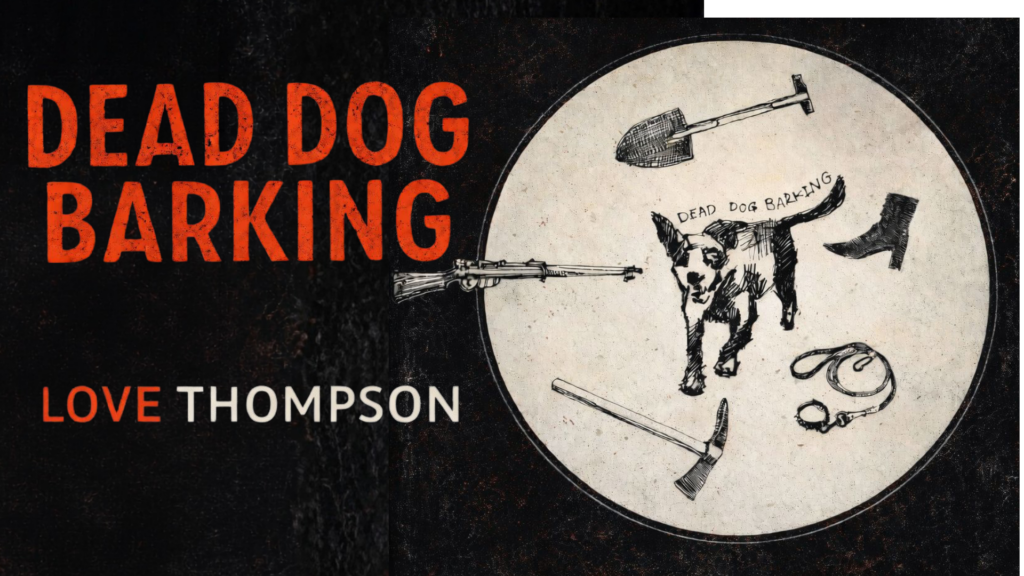
I know I keep coming back to the dog. The dog is real. The dog is the reason the book exists. The dog also drank from the rainwater tank one summer and got into the lemon myrtle and barked at a chord progression only it could hear for six straight hours. That dog deserves a chapter. It got four.
Why pubs make better classrooms than classrooms
A pub is the only public space in a country town where you can sit alone without being weird about it. People talk to themselves. They talk to their drink. They talk to the dog under the table. They tell you things they’d never tell a counsellor because counsellors charge $180 an hour and a schooner is eight bucks and comes with eye contact.
I wrote most of Dead Dog Barking in the upstairs office of that pub, listening to the bar below like it was a radio station. If the book reads like a Tuesday — slightly sloshed, weirdly profound, occasionally interrupted by a dog — that’s on purpose.
See you on Tuesday.